 English
 ภาษาไทย

Languages

What Children Really Learn Beyond Academics in Preschool
Submitted by thailandnswadmin on Thu, 05/14/2026 - 12:21
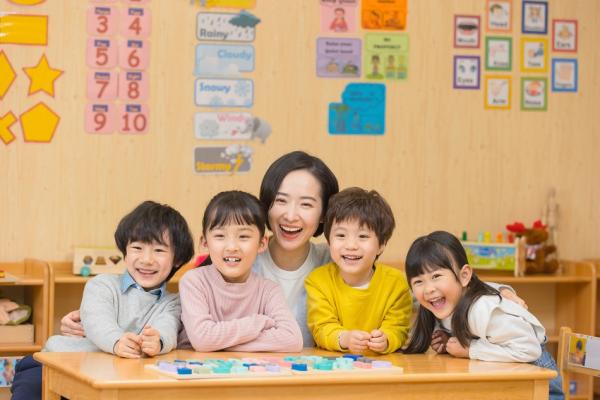
Early childhood education is more than just a jumpstart on the basics of literacy and numeracy. Children are going through a complex developmental process in a high-quality Preschool environment that lays the foundation of the cognitive and emotional architecture for future success. Though a solid academic foundation is built, it is often your life skills that are formed outside of the textbooks.
Developing emotional regulation and self-control
Navigating complex emotions is one of the most crucial lessons learned in Preschool. Children learn to wait, share and deal with disappointment, in an organized circle of friends. With daily experiences, they can develop resilience and practices that help to soothe themselves in response to challenges which will be critical as they enter the more academically challenging years of secondary school.
The concepts widely viewed as social intelligence or cultural competence in the context of a multicultural environment
Firstly, the biggest and most important reason is that international Preschool basically gives children a segment of their experience very early in life where the topic of diversity comes into play. This collaborative play increases their communication with peers from different backgrounds and helps develop empathy and social flexibility. Learning to negotiate and cooperate with others is a foundation of global citizenship that starts in the sandbox.
Executive function and cognitive flexibility
Play-based input is aimed at pushing a child to grow his/her executive functions, working memory and mental flexibility. Planning a construction with blocks, or following the multi-step directions to receive a few new pieces during an art or craft task these experiences are training the kid's brains to concentrate and problem-solve. These ways of thinking are what really predict long-term academic success.
Physical Coordination and Motor Skills
Preschool years -- a focus on fine and gross motor development These activities (eg, painting, using safety scissors, climbing) go beyond recreation; they are key for hand-eye coordination and core strength. All of these refer to physical milestones which are essential preconditions for writing and more advanced physical tasks typically in later primary education.
Cultivating independence and personal agency
The Preschool environment is productive where children are made to take care of themselves. They first learn to take care of their things, pick their activity and settle petty disputes. This early independence leads to children believing that they can learn and interact in the world.
Fostering a habit of inquiry throughout their lives
The greatest gift a quality Preschool can provide in the long run is to maintain a child’s natural curiosity. When educators recreate the process of questioning and learning, children learn to see education as a motivator and reward. The biggest instrument for a student to carry into their educational future is the desire and willingness to comprehend how the world works.
When academics are offered in a mindful way, without rigidity and the pressure to compete, then quality Preschools guarantee that children receive emotional stability, social skills and intellectual curiosity all together as they grow. Should it not be that this foundation at all institutions should prepare students for the next grade, and a meaningful life in an ever-changing global society; as is the case at Brighton College Bangkok?